Jan 09 , 2026
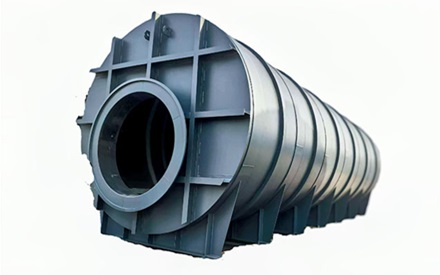
Safe operation is a fundamental requirement in sulfuric acid production, and the sulfuric acid converter plays a central role in ensuring stable and controlled chemical reactions. As a critical unit responsible for converting sulfur dioxide into sulfur trioxide, the sulfuric acid converter operates under high temperatures and corrosive conditions, making safety considerations essential throughout daily operation, monitoring, and maintenance. Understanding how safety is addressed through design, structure, and operational practices helps operators reduce risks and maintain long-term system stability when using a Yongji sulfuric acid converter.
The safety of a sulfuric acid converter begins with its structural and engineering design, which directly affects operational stability under demanding conditions. Yongji sulfuric acid converters are designed to withstand high-temperature gas flow and corrosive sulfur-containing environments, reducing structural stress during continuous operation. The internal configuration supports stable gas distribution and controlled reaction conditions, which helps avoid localized overheating and uneven catalyst performance. From a safety perspective, such design considerations help minimize unexpected pressure fluctuations and reduce the likelihood of operational disturbances that could compromise the sulfuric acid converter system.
Material selection is closely linked to safety in sulfuric acid converter operation, as long-term exposure to corrosive gases can weaken equipment integrity if unsuitable materials are used. Yongji sulfuric acid converters adopt materials suitable for sulfuric acid production environments, supporting resistance to chemical corrosion and thermal stress. This approach helps maintain consistent mechanical strength over time and reduces safety risks associated with material fatigue or corrosion-related leakage. Reliable material performance contributes to safer operation by maintaining stable containment of process gases within the sulfuric acid converter.
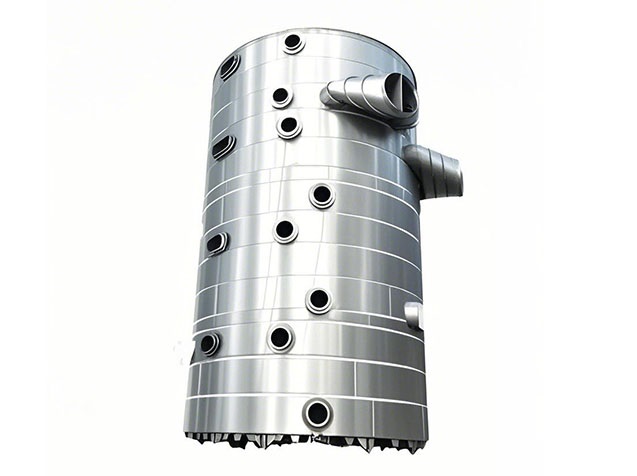
Temperature control is a decisive factor in sulfuric acid converter safety, as the conversion reaction is highly temperature-dependent. Maintaining appropriate temperature ranges supports controlled reaction rates and helps prevent abnormal operating conditions. In Yongji sulfuric acid converters, temperature stability is supported through structural design and process integration within the sulfuric acid production system. Effective temperature management reduces risks such as catalyst damage, excessive thermal expansion, or unstable gas flow, all of which are closely linked to operational safety in sulfuric acid converter systems.
Operational stability is a key safety consideration in sulfuric acid converter use, especially in continuous industrial processes. Stable gas flow, consistent pressure conditions, and coordinated integration with upstream and downstream equipment contribute to predictable operation. Yongji sulfuric acid converters are designed to support steady operation, which helps operators maintain controlled conditions and reduces sudden operational changes that could introduce safety risks. Clear operational procedures combined with equipment stability enhance overall safety during long-term sulfuric acid converter operation.
Safety Aspect | Conventional Operation Without Optimization | Yongji Sulfuric Acid Converter Design Focus |
Structural Stability | Greater sensitivity to temperature fluctuation | Designed to maintain stability under high-temperature operation |
Corrosion Management | Higher risk of long-term material degradation | Materials selected for sulfuric acid process compatibility |
Temperature Control Support | Limited tolerance for reaction instability | Structural support for stable temperature conditions |
Operational Predictability | Higher dependence on manual adjustment | Designed for stable and continuous operation |
Safety During Long-Term Use | Increased inspection pressure | Supports long-term operational safety through design |