Apr 20 , 2026
Industrial energy systems are under increasing pressure to improve efficiency while reducing operational costs. In boiler-based systems, a significant portion of energy is still lost through flue gas exhaust. This loss represents not only wasted heat but also higher fuel consumption and unnecessary emissions.
To address this issue, heat recovery technologies have become essential in modern industrial design. Among them, economizers play a critical role by recovering waste heat from flue gases and using it to preheat feedwater before it enters the boiler system.
By improving thermal utilization, economizers help industries reduce fuel demand, enhance system efficiency, and support more sustainable operations without major changes to the core boiler structure.
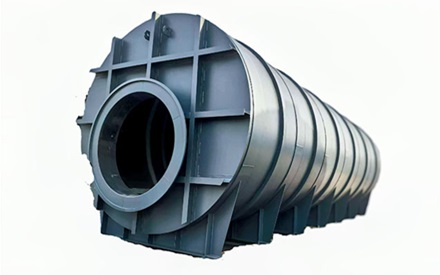
A boiler economizer is a heat exchange device installed in the flue gas path of a boiler system. Its main function is to recover residual heat from exhaust gases and transfer it to feedwater or other working fluids entering the boiler.
Instead of allowing hot flue gases to escape directly into the atmosphere, the economizer captures part of this thermal energy and reuses it within the system. This process significantly reduces wasted energy and improves the overall thermal efficiency of the boiler.
Although designs may vary depending on industrial requirements, most economizer systems share common structural components.
Component | Function |
Heat exchange tubes | Transfer heat from flue gas to water |
Inlet header | Distributes feedwater into the system |
Outlet header | Collects preheated water |
Casing | Protects internal components and ensures gas flow direction |
Support structure | Maintains mechanical stability under high temperature |
Each component is designed to withstand high-temperature flue gas environments while maintaining efficient heat transfer performance over long operational cycles.
The fundamental concept behind heat recovery systems in boilers is relatively straightforward, but highly effective in practice. The process is based on thermal energy transfer between two media: hot flue gas and relatively cooler feedwater.
In industrial applications such as power generation, chemical processing, and manufacturing plants, the system operates continuously. Hot exhaust gases leaving the boiler still contain a considerable amount of usable heat energy. Instead of releasing this energy directly into the environment, the economizer captures it through conductive and convective heat transfer.
At this stage, the role of the system can be better understood through the concept of economizer working principle, which describes how thermal energy from flue gases is transferred to incoming feedwater, reducing the amount of fuel required to raise steam to the desired temperature and pressure.
This heat exchange process generally follows these steps:
1. High-temperature flue gas flows through the economizer tubes
2. Feedwater enters the system at a lower temperature
3. Heat is transferred through tube walls from gas to water
4. Flue gas temperature decreases before release
5. Feedwater temperature increases before entering the boiler drum
By increasing the temperature of feedwater before it enters the boiler, less fuel is required to convert it into steam. This directly improves overall system efficiency and reduces operating costs.
Different industrial environments require different economizer designs. The most common types include:
Type | Description | Typical Application |
Non-condensing economizer | Maintains flue gas above dew point | Standard industrial boilers |
Condensing economizer | Recovers latent heat from moisture | High-efficiency systems |
Finned tube economizer | Increases heat transfer surface area | Space-limited installations |
Bare tube economizer | Simple structure, easy maintenance | Conventional boiler systems |
Each configuration is selected based on factors such as fuel type, boiler capacity, and heat recovery requirements.
The primary purpose of installing an economizer is to improve energy utilization efficiency. In conventional boiler systems, a significant amount of energy is lost through exhaust gases. By recovering part of this energy, economizers help reduce the load on the boiler's primary heating process.
This results in several operational advantages:
· Reduced fuel consumption
· Lower greenhouse gas emissions
· Improved boiler thermal efficiency
· Enhanced system stability
· Reduced operational costs over time
In industries where boilers operate continuously, even small efficiency improvements can lead to substantial long-term savings.
Economizers are widely used across industries where steam generation is essential.
Industry | Application Area | Benefit of Economizer |
Power generation | Steam turbines | Improved plant efficiency |
Chemical processing | Reaction heating | Stable temperature control |
Textile manufacturing | Dyeing & drying | Reduced energy cost |
Food processing | Sterilization systems | Better heat utilization |
Petrochemical industry | Refining processes | Lower fuel dependency |
In some complex chemical systems, heat recovery is also integrated with specialized equipment such as a sulfuric acid heat exchanger, where thermal energy recovery plays a similar role in optimizing energy use within acid production processes.
To understand the impact of economizers, it is useful to compare systems with and without heat recovery.
Aspect | Without Economizer | With Economizer |
Flue gas temperature | High | Lower |
Fuel consumption | Higher | Reduced |
Feedwater temperature | Lower | Preheated |
System efficiency | Lower | Improved |
Energy waste | Significant | Minimized |
This comparison highlights why economizers are now considered standard equipment in modern boiler design rather than optional components.
In large-scale facilities such as a sulfuric acid plant, energy optimization is critical due to continuous high-temperature processes. While economizers are primarily used in boiler systems, the principle of waste heat recovery is also applied across various heat exchange units in these plants.
The integration of economizers into broader thermal systems allows industries to:
· Recover waste heat from multiple process stages
· Improve overall plant energy balance
· Reduce reliance on external fuel sources
· Support environmental compliance goals
This system-level approach ensures that energy is not wasted at any stage of industrial production.
When selecting or designing an economizer, engineers typically evaluate several key factors:
· Flue gas temperature range
· Feedwater inlet conditions
· Corrosion resistance requirements
· Material selection for heat exchange tubes
· Maintenance accessibility
· Pressure drop limitations
Proper design ensures long-term reliability and stable heat transfer performance under continuous operation.
Economizers provide both technical and economic advantages in industrial operations:
· Improved boiler responsiveness due to preheated feedwater
· Reduced thermal stress on boiler components
· Lower fuel input requirements for the same steam output
· Extended equipment lifespan due to optimized thermal load distribution
These benefits make economizers an essential component in modern energy-efficient boiler systems.
Economizers are essential heat recovery devices that significantly improve boiler efficiency by capturing waste heat from flue gases and transferring it to feedwater. This process reduces fuel consumption, lowers emissions, and enhances overall system performance. As industries continue to prioritize energy optimization, economizers remain a key solution for sustainable and cost-effective thermal management.
The main purpose is to recover waste heat from flue gases and use it to preheat feedwater, improving overall boiler efficiency.
It reduces the amount of fuel needed by preheating incoming water, which lowers the energy required to produce steam.
Industries such as power generation, chemical processing, food production, and textile manufacturing widely use economizers.
An economizer is a specific type of heat exchanger designed primarily for recovering flue gas heat in boiler systems.
Yes, regular inspection and cleaning are required to maintain heat transfer efficiency and prevent fouling or corrosion.